
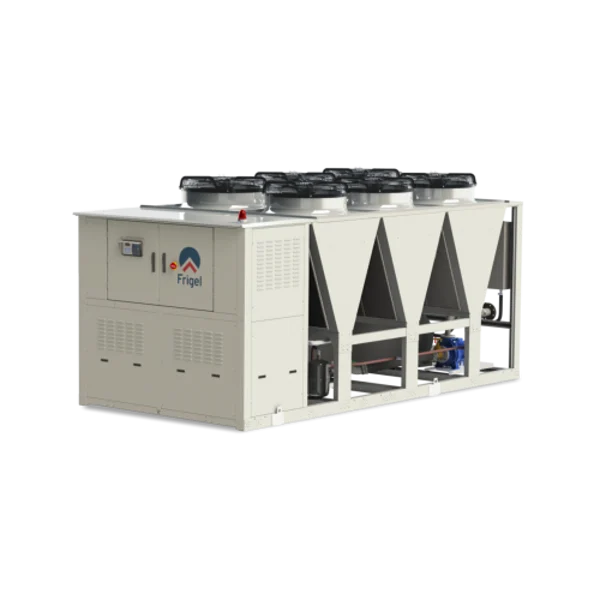

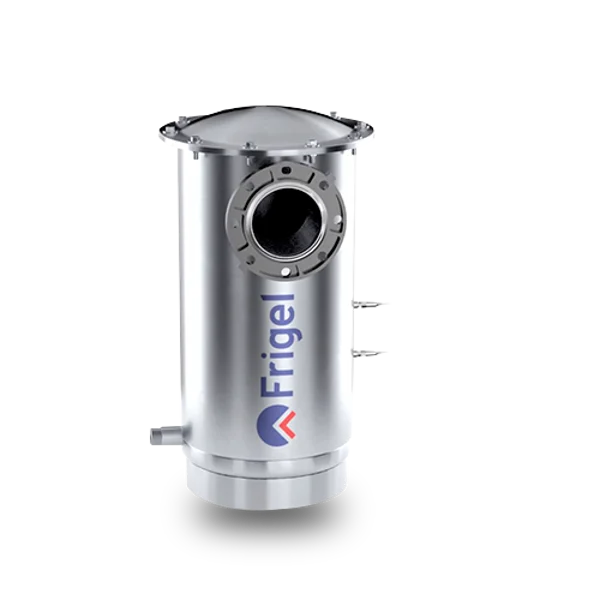

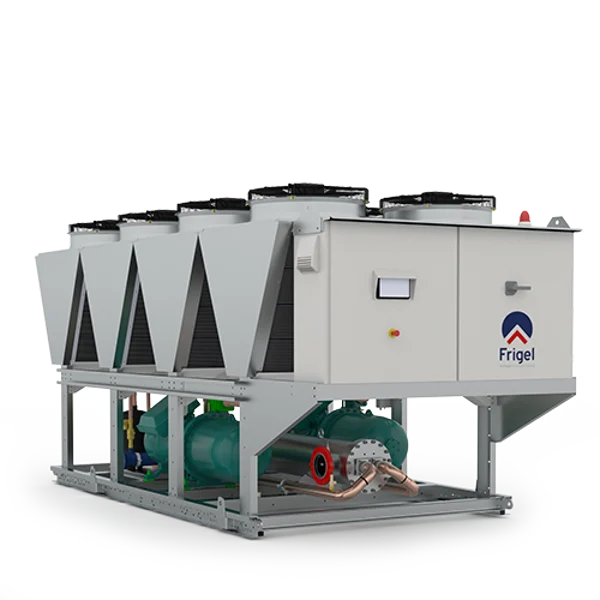
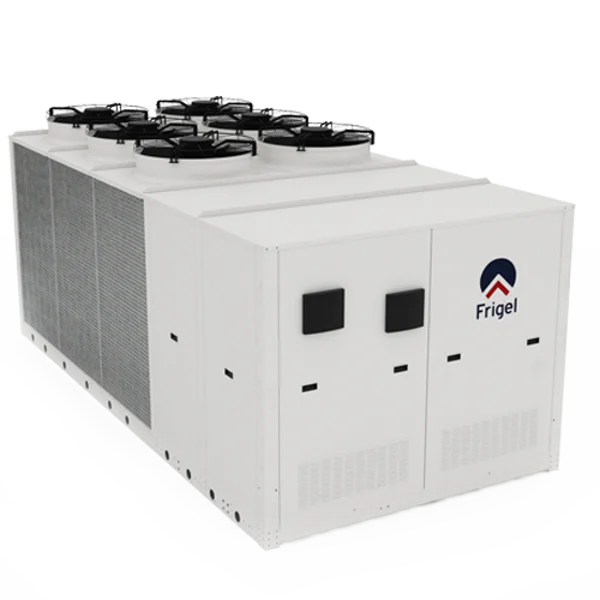





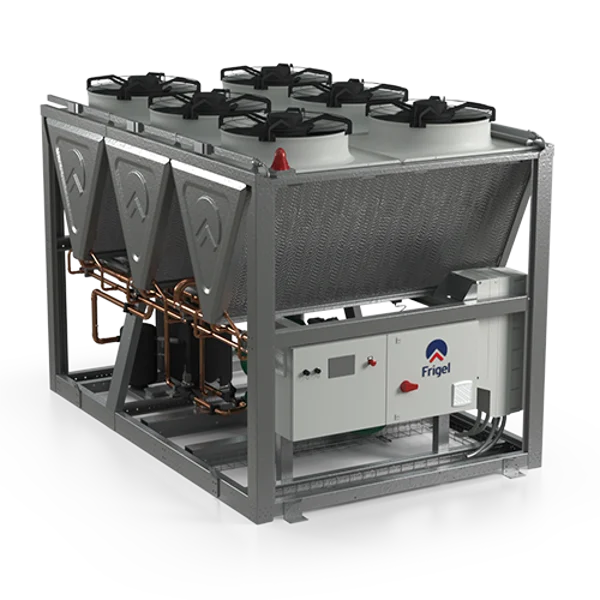

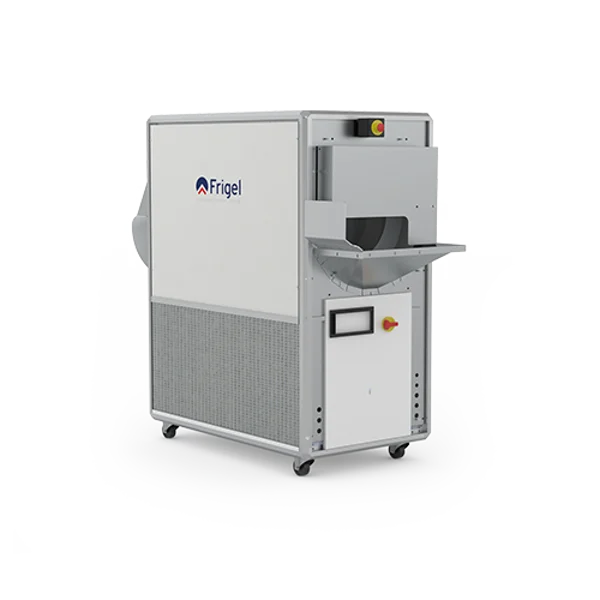

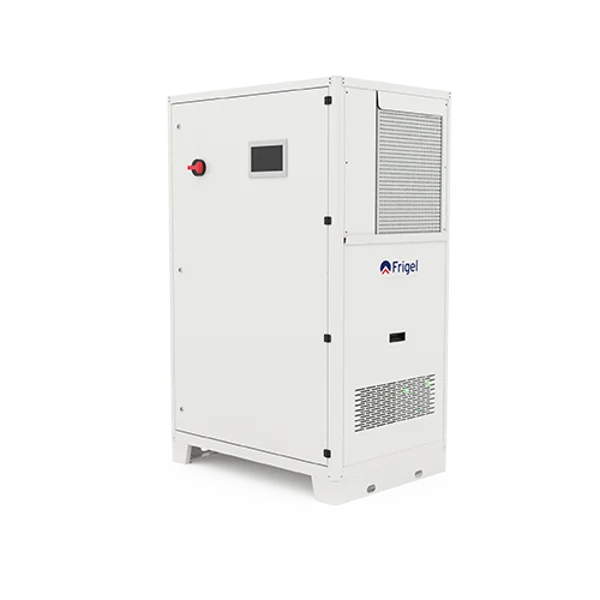

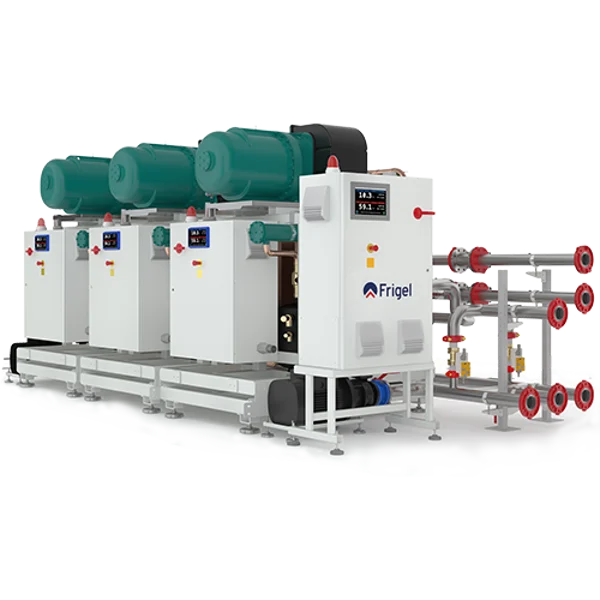




The replacement of the evaporative cooling tower
Adiabatic Cooling Systems
Reduced operating costs and safeguard of water resources.
Traditional open evaporative cooling towers consume immense amounts of fresh water daily and carry severe environmental risks.
Frigel’s Ecodry adiabatic technology
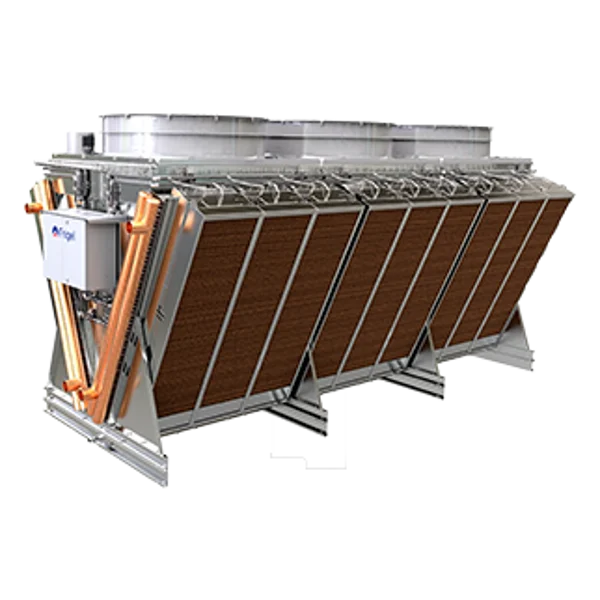
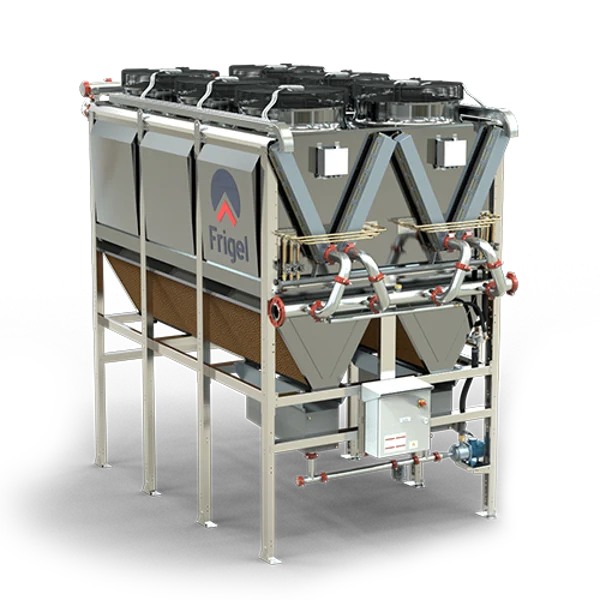
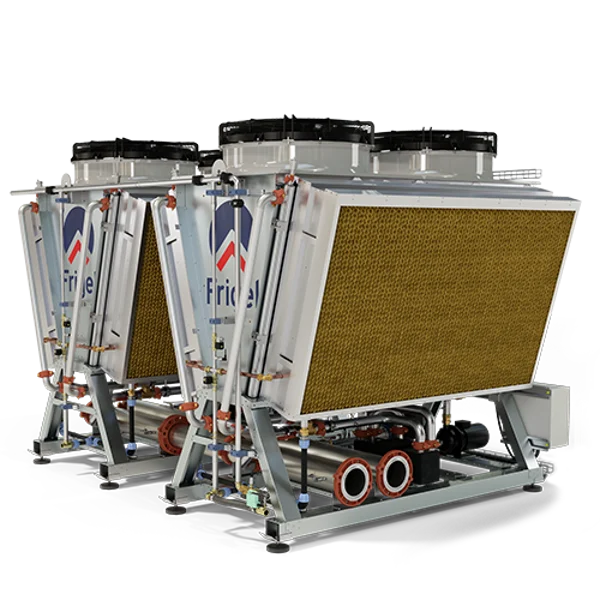
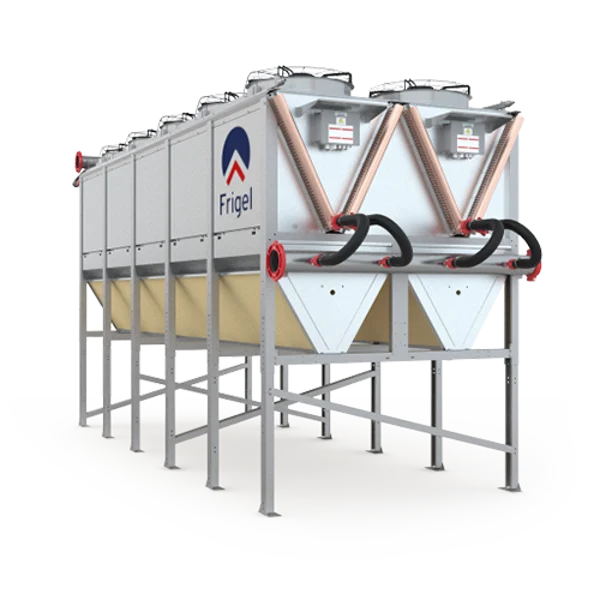
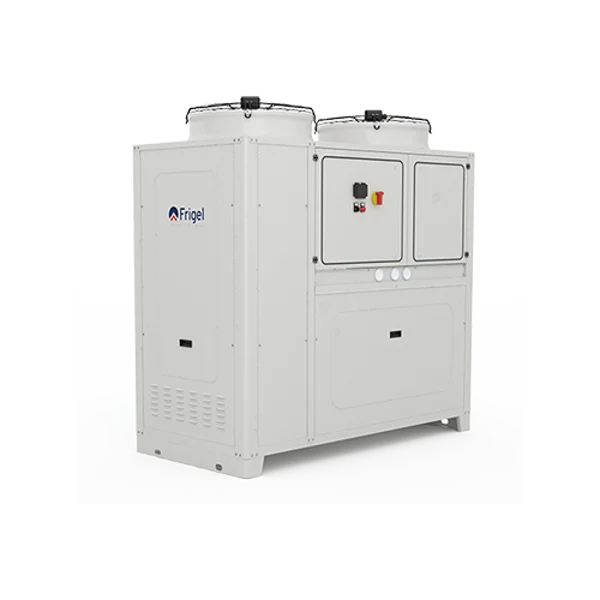
It operates as a fully closed-loop air-cooled heat exchanger, engineered as the ultimate replacement for industrial cooling towers. By utilizing water evaporation only during extreme peak ambient conditions, this smart system delivers up to 95% water savings and up to 15% energy reduction, drastically lowering operational running costs (TCO).
Its unique, aerosol-free design guarantees certified anti-Legionella protection, ensuring strict health and safety compliance for manufacturing plants across global markets, from Asia to the Americas. 9,000+ global installations.

Discover our products


What is adiabatic cooling?
A water cooling system using closed circuit ambient air
And the water cooling system, using the ambient air, combines:
- Finned pack water-to-air heat exchanger (radiator)
- Axial fans for forced air convection
- An adiabatic system for air pre-cooling during hot weather
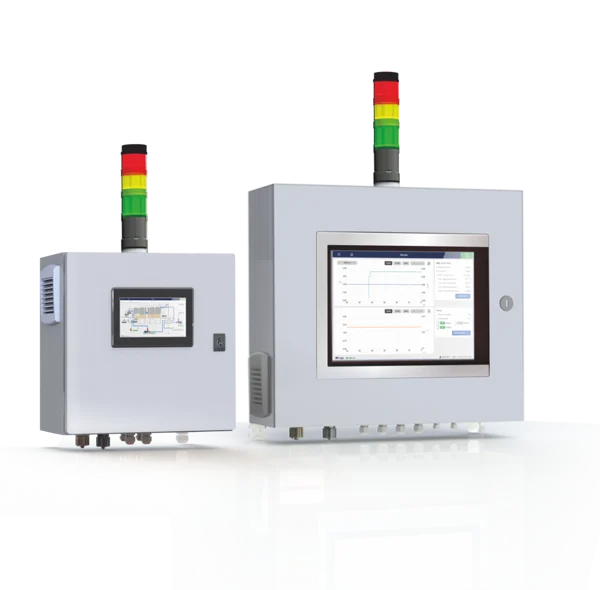
- A monitoring device for system management
How adiabatic coolers work?
Water consumption only if required
It has 2 working modes:
- “Dry” Mode - During most of the year, the unit works as a conventional dry-cooler, with no water consumption and the heat transported by the water is dissipated in the ambient air by convection of the air forced by the fans.
- “Adiabatic” Mode - During high ambient temperature periods and only when the dry mode is not sufficient to maintain the outlet water temperature within a pre-set maximum set point, the adiabatic mode is automatically activated. The high temperature ambient air, before entering the finned exchanger, passes through the “adiabatic chamber” (patented) where humidity is added and consequently it is pre-cooled. In this case, the control system continuously regulates the quantity of water evaporation, only when necessary, to maintain the desired set point.