






















Die Bedeutung der Kühlung im IML
Unterschätzen Sie die Kühlung nicht
Frigel asked a few questions concerning In Mold Labeling Applications to its partners StackTeck and Avance Industrial, which subsequently led to the creation of this interview.
THE TECHNOLOGY
IML (In Mold Labeling) technology is the most innovative labeling process for plastic technology. The procedure is complex: the graphic is pre-printed in a thin layer, the label is inserted into the cavity with an automation system, the plastic is injected over the label. The result is a component with the label already attached, this will give a more sophisticated look to the container and will reduce the production steps.
ANSWER - Christopher Day, General Sales Manager LATAM at StackTeck: Cooling is a critical part in thin wall molding. In mold design our challenge is such that we need to cool the molten resin the fastest possible way yet allow the resin to flow into the cavity to fill the part and pack it. The latter requires high injection pressure and speeds to allow the resin to flow into the cavity and not “freeze-off”, hence the need for packaging machines with accurate metering, shot to shot consistency, high speed & high pressure, and accumulator assistance.
Although IML thin wall parts are “thin”, fast cycle times are possible only if we can cool the part almost instantaneously & effectively to allow a proper demolding of the part with good part quality attributes. Cooling time on thin wall molds is a relatively small percentage on the overall cycle time. Yet to extract the heat from the steel molding surface you also need good cooling line design around the molding surface and best possible steel material selection for best thermal conductivity at your hottest or cycle limitation part design. But for these cooling lines to be effective, turbolent flow is also needed achieved by high GPM rates to allow efficient heat extraction throughout the entire mold cooling layout across all the cavities. Laminar flow caused by poor GPM rates will hinder your mold cooling and part quality. Hence the mold requires consistent cooling, high GPM rate, turbulent flow, and constant temperature set point. Cooling variation due to neighboring systems using the same cooling system will affect process and part quality. Therefore, a dedicated chiller at the mold is recommended.
ANSWER - Alex Kramer, Technical Director at Avance Industrial: IML Cell involves high speed machine and robot, as well as high technology mold. It is important to choose adequately the cool-ing system that will not be the bottleneck of the cell and limit the productivity. That means the main challenge for the cooling system is to provide the right cooling capacity, flow rate and temperature stability to maximize the pro-ductivity of the whole cell.
ANSWER - C. Day, StackTeck: Once a mold goes through its FAT (Factory Acceptance Test) and samples are dimensionally approved, the system has a locked-in process window from which, if the process varies outside this window, part quality and cycle may be affected. If all parameters are kept within this tolerance window, you will have a solid process and part quality. Possible scenarios falling outside this window are issues with under packed parts, sizes, flash, weight, cycle time, etc.
Focusing on cooling within this tolerance window, it is essential to maintain consistency in flow rate, temperature and pressure loss across the mold. Should the cooling system be affected by outside factors, such as ambient temperature, flow rate, water temperature, etc., part quality and cycle time will be affected.
Colder water does not necessarily improve your cycle time or heat transfer rates. In fact, colder water reduces chiller refrigeration capacities. Turbulent flow is the key point, as turbulence in the mold water channels is what extracts the heat from the steel more effectively that laminar flow which has a detrimental effect, as the water is flowing through the middle section and the water near the surfaces is almost static and does not mix with the water flow towards the middle of the water channel.
Process stability and repeatability, as mentioned before, is very important. Thin wall molds are accurately machined molds with very tight tolerances. If the IMM does not deliver shot-to-shot consistency, the mold will reflect this as a defect in the part with either short shot, flash, under packing, showing up on the molded sample parts creating the false impression it’s a mold issue. Cooling inconsistency will affect part quality across the matrix of the mold also creating the false impression there is something wrong with the mold or that is unbalanced when the issue is an im-balance of cooling throughout the mold.
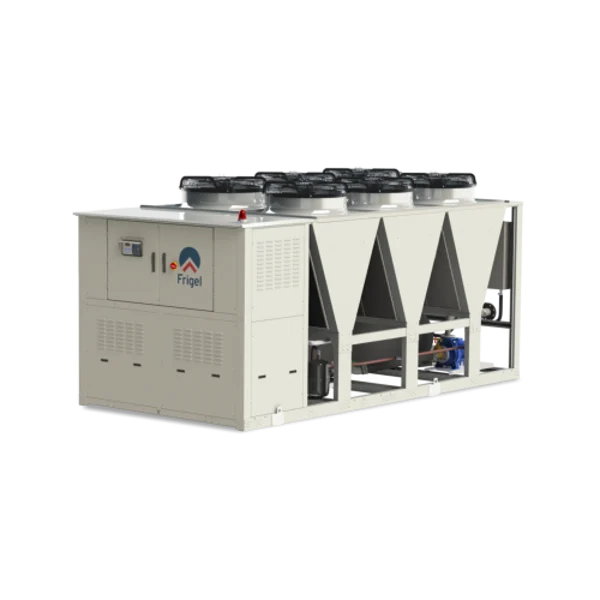
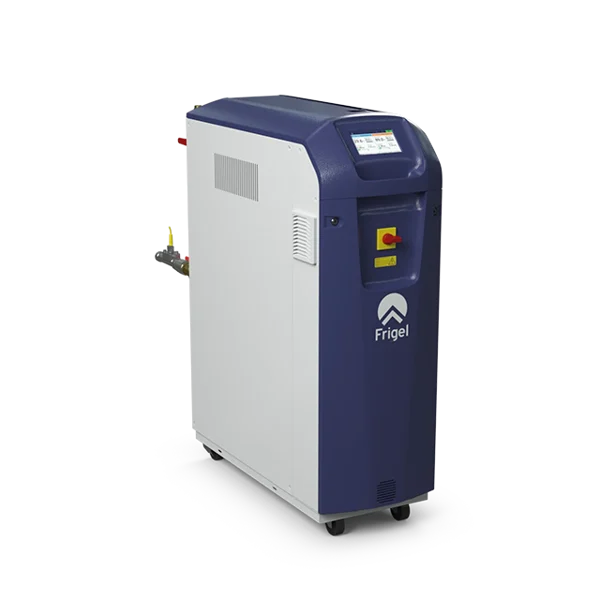
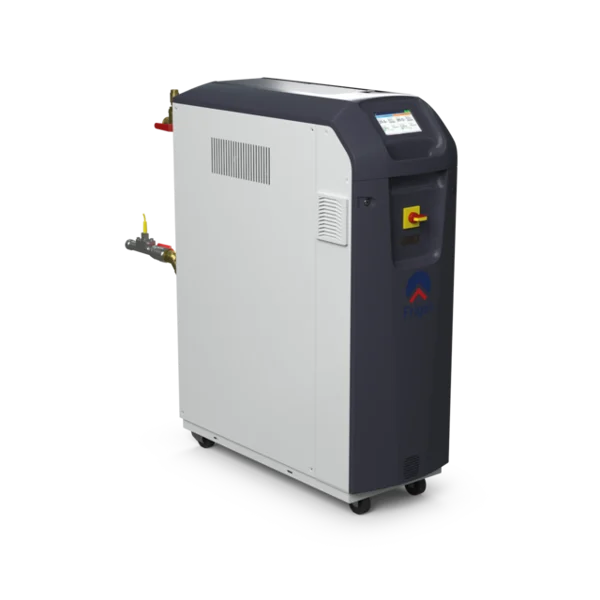
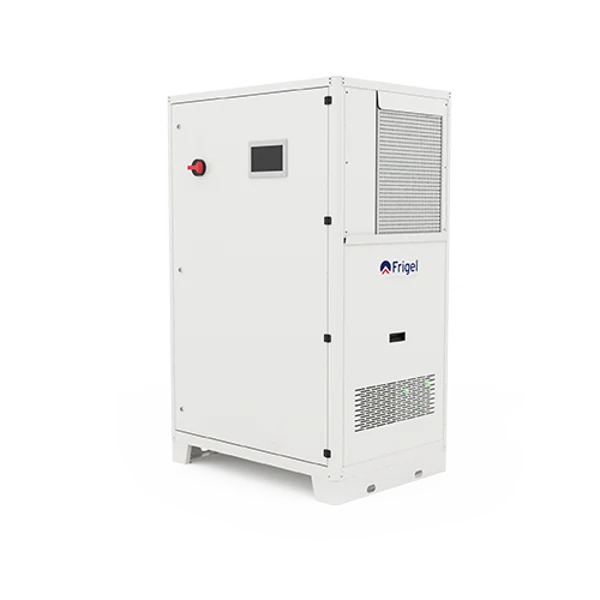
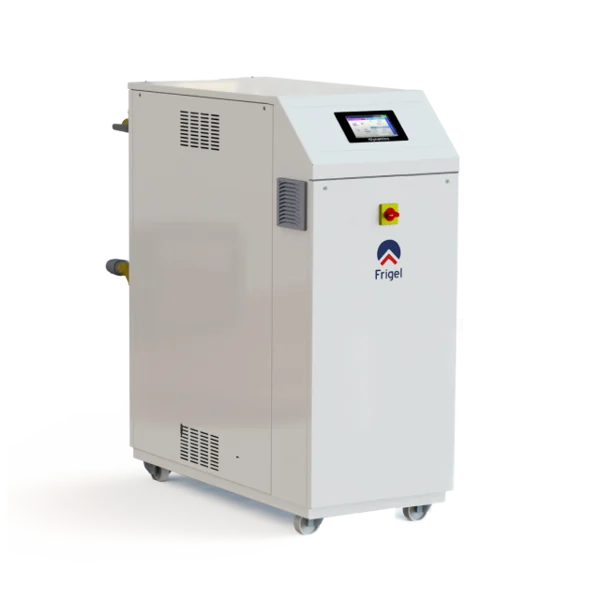
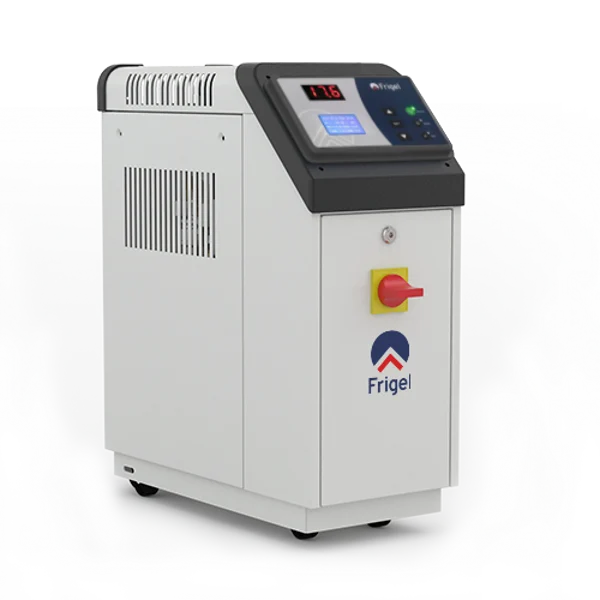
ANSWER - A. Kramer, Avance Industrial: The vast majority of IML molds are thin wall. Usually, for thin wall parts, it is very important to have high flow rate, high pressure available at the mold and temperature stability throughout the whole production shift. If one of these three parameters change, there might be quality problems that can cause scrap or it might halt the IML cell. Most of the time a central cooling system is not able to maintain these 3 parameters sta-ble because it is influenced by the other IMMs in the plant. The Microgel is able to isolate the cell from the rest of the machines in the factory, giving the stability that will allow the IML cell to run with no problems.
The cell is very sensitive. Any cooling variation may cause quality and productivity problems. If the customer does not have a reliable cooling system, usually the cell has to be set up with the worst-case scenario to avoid any stopping. This means to reduce the velocity and the productivity, so the cooling system becomes the bottleneck of the IML cell. That is why having a reliable cooling system is vital for having the cell working at the highest velocity.
Read the answers on our White paper, download it clicking on "Download der Presseschau" button (on top of this page).
Mehr Infos
Kontaktieren Sie unsDamit verbundene Artikel
Sie könnten auch interessiert sein an


